
Media & news
Hiatt Sings the Black Belt
Feb 28, 2026
The history and legacy of the Alabama Black Belt have always been mysterious. At the start of the Civil War, it was the wealthiest area in the country. Now it is the poorest. There are too many ghosts across the Black Belt. They still cast long shadows that can’t be escaped.
A February cold front has settled across the south. Yesterday, the wind chill was nine degrees. Just before dawn, the temperature is 17 degrees in Choctaw County. Bitter cold. The sun rises in a bright orange halo with a haze coming off the Tombigbee River, and frost hangs heavy on the young pines.
The fireplace is warm, but it is Sunday and I need to get home. I pack my things into my truck and see that tire ruts in the road are still frozen from last night. The red clay and gravel road turns to pavement as the heavy steel gate closes behind me. I turn on John Hiatt and his country blues. It seems right.
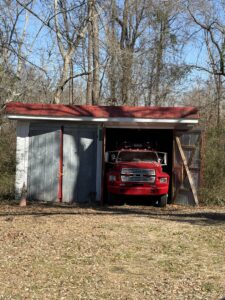
I pass a doublewide tucked into red clay banks and pine forests about a mile down from the gate where five cars are parked. Yesterday, when I passed, two men were working on one of the trucks. I wondered how they could hold the tools in the cold. Today, the truck looks good sitting in the yard.
I cross the Tombigbee River at Lavaca near Ezell’s Catfish House with its history of serving the boatmen working the boats for over a hundred and fifty years. John sings “All the Way to the River.”
Nanafalia comes and goes quickly. There isn’t much left here. A credit union in the area is named Nanafalia, but there isn’t a branch here. The Mini-Mall has been boarded up a while. A Baptist Church looks active, but no one is praying there this morning. John sings “My Old Friend.”
Sweetwater is next. A convenience store with six or seven cars, a bank and a gin. A welcome sign lists all the state football and baseball championships the kids of this crossroads community have won. Those memories are more than any community is entitled. John sings “Long Time Comin’.”
I drive through the pine trees and across history and time. Trailers on blocks at the edge of fields are yesterday’s tar-papered shacks. Rusted out cars sit beside new pickup trucks. Through Dixon Mills, Vineland, Pine Hill, the Alabama River and on to Camden. I take time to drive around town to look at the antebellum homes. They represent a time long gone, but they are a part of the present, too. Young couples and their kids bundled up in heavy coats headed to church give hope. Coast to Coast Furniture and the Pecan on Broad Restaurant look interesting, but they are closed. John sings “Dust Down a Country Road.”
From Camden on to Oak Hill with its country store that has welcomed so many faces in from the cold. I have passed here before and seen old black men standing close to a barrel fire to stay warm, but there is no barrel fire today. Either it is too cold even for a barrel fire or the old men don’t gather on Sundays. The Oak Hill Fire Department has outgrown its building. The nose of the firetruck sticks out the building’s front. The churches are empty here, too. John sings “The Open Road.”
On to Pine Apple where every house is named. The old girls’ school still stands. It has been empty for years. An antebellum mansion stands guard over City Hall, the Post Office, and a gazebo that could hold maybe a dozen people. Travelers from Pennsylvania are in the gazebo this cold morning, but I can’t imagine what they are doing. It is almost noon and another well-kept Baptist Church is empty. John sings “Thunderbird.”
The interstate at Greenville and back to the present. The Alabama Black Belt, with its antebellum legacy, slowly eases into memories. Hopefully, it will have a better future than its present. Hopefully, the young people in those Black Belt towns will win more championships, find work, build families, and turn hopelessness into happiness.
As I head south, John sings “God’s Golden Eyes.”